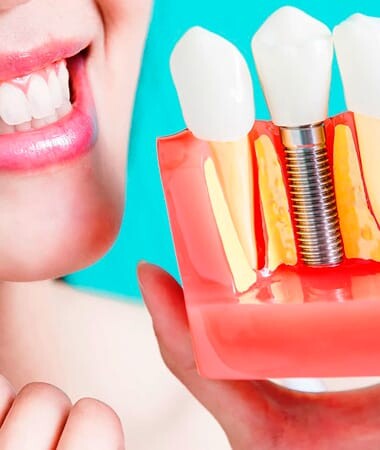
Types of Implants
In the classification of all known types of dental implants, several groups can be distinguished. According to their purpose, all artificial roots are divided into two types:
- Intrabony implants. Such implants are most commonly used at the "Varshavsky" Dental Center in Vinogradar. They are installed in the context of both classical and one-stage implantation. The advantages of these rods include easy installation and good osseointegration.
- Subperiosteal implants. Rods of this type are attached to the gum tissue or bone. However, subperiosteal structures are only used for temporary fixation or during preparation for implantation.
Types of Implants by Fixation Type
The type of fixation of the artificial root is an alternative criterion for classifying implants. In dental practice, three main types of implants are used:
- Root-form implants. These are a variety of intrabony implants. They are used in the majority of clinical cases at our dental clinic in Kyiv. It is important that the patient retains sufficient bone tissue volume before implantation. Otherwise, the patient may require a bone grafting procedure.
- Basal implants. Titanium roots of this type are fixed in cases where bone grafting is not possible due to tissue atrophy. Implants are fixed in solid basal bone. These products are used infrequently, as implantation has a fairly broad list of contraindications.
- Zygomatic implants. Elongated implants (3-6 cm) are implanted in the zygomatic bone of the upper jaw, which is resistant to atrophy and inflammation. Our doctors successfully perform such operations despite their complexity. Non-removable prostheses are installed practically immediately after tooth implantation, during rehabilitation.
Advantages and Differences of Implants from Various Manufacturers
For your convenience, we have provided a comparative characteristic of implants used at the Dental Center in Varshavsky Microdistrict in the table below:
| Implant Brand |
Advantages |
Disadvantages |
| Alpha Dent |
– Biocompatibility
– High aesthetics
– Lifelong warranty |
– Installation complexity (requires exceptional skill from the dentist) |
| Alpha Bio |
– Suitable for low bone volume
– Affordable price
– Versatility due to a wide range of models |
– Aluminum and vanadium ions in the alloy composition can cause allergies (during diagnosis, the doctor collects medical history to exclude this unpleasant phenomenon) |
| AB Dental Devices |
– Simple and minimally invasive installation due to sharp threading
– Accelerated osseointegration
– Biocompatibility |
– Mostly used for one-stage implantation with immediate loading |
| MegaGen |
– High aesthetics
– Suitable for fixation in bone of any quality
– Affordable price |
– Less known and less common in Ukraine |
| Trinon Q-Implant System |
– Pure composition and etched surface
– High osseointegration
– Versatility |
– Implants cannot be used for patients allergic to titanium |
| Konus k3pro |
– Convenient design
– Reliable attachment
– Biocompatibility |
– Relatively high cost |
| Nobel Biocare |
– High osseointegration
– Simple and predictable implantation
– Improved biocompatibility |
– High price |
Implant Service Life
Many manufacturers offer a lifetime warranty on their products. With proper care, artificial roots can indeed outlast their owners. The orthopedic structure placed on the implant can last from 3 to 20 years. The service life depends on the type of prosthesis and the material it is made of.
Methods of Dental Implant Installation
Depending on the type of implantation (classic, one-stage) and, accordingly, the type of implant, the dental surgeon chooses one of the installation methods for the structure:
- Gingival Flap Surgery. This is the most common method used in classic implantation. The method involves an incision in the gums, detaching a gingival flap, forming a bone bed, and suturing the wound. In such cases, two-piece implants are used.
- Minimally Invasive. In this case, the implantologist screws a single-piece implant into the jawbone through a puncture in the gums, without incisions or bone bed creation. Stitches are also not applied by the doctor.
To ensure the precise placement of the implant in the bone during minimally invasive surgery, the doctor prepares a surgical template or guide.
How Implants Are Placed at the "Varshavsky" Dental Center in Vinogradar (Installation Stages)
The installation of implants at our Dental Center in Kyiv follows the following algorithm:
- Diagnosis. After an initial examination, the doctor will refer the patient for a computed tomography scan (to assess bone quality and volume). The dentist selects the appropriate implant model and "maps out" the treatment stages using computer software.
- Oral Cavity Sanitation. In addition to addressing dental issues (treating cavities, pulpitis, gum problems, etc.), the patient undergoes professional hygiene cleaning.
- Implant Placement. The artificial implant root is implanted into the jawbone through gingival flap surgery or through a puncture in the gums.
- Gingival Formation. In a classic operation, a gingival former (a special metal washer) is placed upon completion of the osseointegration process, which takes about 3-6 months. The appliance needs to be worn for about two weeks.
- Abutment and Crown Placement. After removing the gingival former, the doctor attaches an abutment and installs a permanent crown (in the case of two-stage implantation).
In the case of one-stage implantation, a temporary prosthesis is loaded onto the implant on the 2nd or 3rd day after surgery. It is slightly adjusted in occlusion to avoid overloading and is replaced with a permanent one after full integration of the artificial root.
Bone Tissue Augmentation
Bone grafting is most often required for "full arch" implantation in cases of bone deficiency on the jaw. Approximately six months after tooth loss, bone resorption begins in the absence of a tooth. If a patient does not seek treatment immediately after tooth loss, there is a high likelihood of needing bone grafting later. Otherwise, the implants will have nothing to "attach" to.
However, surgery, even in the presence of bone atrophy, is not always necessary. The decision on the need for bone grafting is made by the doctor based on the specific patient's situation.
Rehabilitation after Implant Placement
The duration of tissue recovery after surgery depends on the type of implantation and the patient's overall health. If the gums were incised and sutures were applied, the recovery will take a little longer than in the case of minimally invasive intervention. On average, this period lasts 7-10 days.
Implant Rejection
When the implantation technique is followed correctly, the risk of implant rejection is about 1-2%. Adhering strictly to medical recommendations during the rehabilitation period helps minimize this risk.
Swelling, minor pain, slight body temperature elevation – these are probable and entirely normal symptoms that may occur after implantation. In the majority of cases, they subside within 5-7 days. If symptoms persist, it is necessary to consult a doctor.
Contraindications to Implant Placement
For certain diseases or conditions, surgical intervention can be very risky. Some pathologies complicate the osseointegration process of implants. The dentist at the "Varshavsky" Dental Center in Kyiv will recommend an alternative solution in cases of the following absolute contraindications to surgery:
- Osteoporosis;
- Central nervous system disorders;
- Blood clotting disorders;
- Endocrine system pathologies;
- Oncological diseases up to the remission stage.
There are specific conditions of the body in which implantation is theoretically possible, but only under certain conditions or after treatment. These relative limitations include: pregnancy and breastfeeding, malocclusion pathologies, infections, respiratory diseases, and others.